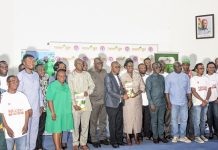


The Ghana Health Service in collaboration with the Korea International Cooperation Agency, has officially launched the KOICA-RMNCAH Network of Practice (NOP) Project aimed at improving reproductive, maternal, newborn, child, adolescent health and nutrition in Ghana.

The launch ceremony took place on Tuesday, March 17, 2026, at the Lancaster Hotel Kumasi in Kumasi.
The four-year project, with an estimated budget of $13 million, will be implemented across three regions—Ashanti, Eastern, and Central Regions. It seeks to enhance service delivery by strengthening Networks of Practice within Ghana’s primary healthcare system.

The initiative will focus on three key areas. First, it will build the capacity of healthcare providers, including midwives and general nurses, through targeted training in critical areas such as the integrated management of neonatal and childhood illnesses. This is expected to improve their skills, knowledge, and professional attitude within the primary care network.
Secondly, the project will prioritise leadership and mentorship within the health system. Through supportive supervision and continuous professional guidance, health workers will be better equipped to handle cases at their facilities that would otherwise be referred to higher-level hospitals.

Additionally, the project will strengthen service readiness at the facility level by providing essential medical equipment and supplies to improve maternal and newborn healthcare delivery. It will also reinforce leadership structures across CHPS compounds, health centres, and district hospitals under the primary care Network of Practice framework.
Speaking on behalf of the Korean Government, the Country Representative of KOICA, Donghyun Lee, reaffirmed Korea’s commitment to supporting Ghana’s healthcare system.

“The Korean government will continue to partner with the Ghana Health Service to resource health workers with clinical decision-making tools, often under challenging conditions. With this support, it will help them deliver quality care, which is one of the most effective ways to improve health outcomes,” he stated.
The Ashanti Regional Health Director, Dr. Fred Adomako Boateng, who represented the Director-General of GHS, expressed gratitude to the Korean Government for the intervention.

“This project will help build the capacity of our health workers to provide quality service to the people and will also support government’s efforts to achieve primary healthcare for all,” he noted.
The event brought together past and present District Directors of Health Services, midwives, traditional leaders, and members of the clergy, underscoring the broad stakeholder commitment to improving healthcare delivery across the country.
By; Nana Yaw Owusu (0240792639).